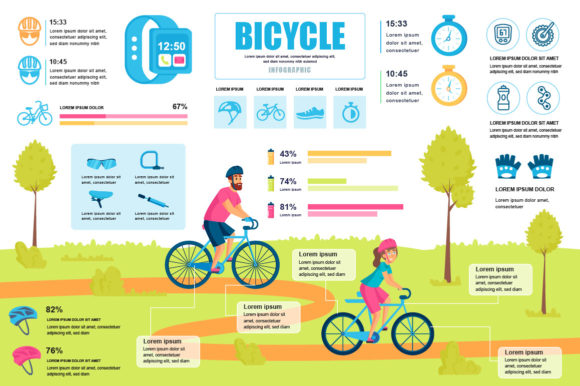
Bicycle Infographic Design Template Guide
Visualizing the mechanics of cycling, athletic performance data, or health trends requires more than just standard text. A Bicycle Infographic Design Template serves as a specialized visual framework that bridges the gap between complex information and engaging storytelling. This resource combines vector illustrations of bicycles and athletes with structured layouts for data visualization, timelines, and workflows. Whether you are presenting training metrics to a professional team or creating educational content about sustainable transport, this template provides the foundational graphics needed to communicate effectively without starting from scratch.
Diverse Applications Across Audiences
The value of a pre-designed infographic asset shifts significantly depending on who is using it and why. While the core files remain the same, the application varies from commercial marketing to personal education. Understanding these distinct perspectives helps in maximizing the utility of the design assets.
For Marketers and Content Creators
Speed and visual consistency are often the primary concerns for digital marketers and bloggers covering sports or wellness niches. When promoting a new cycling gear line or publishing an article on heart rate zones, there is rarely time to illustrate a bicycle frame or anatomical muscle groups from zero. This template acts as a shortcut to professional-grade visuals. The inclusion of banner concepts allows creators to maintain brand cohesion across social media headers, blog featured images, and newsletter graphics. For this group, the editable text features and modular layout mean they can swap out statistics and headlines rapidly while retaining a high-end aesthetic that builds audience trust.
Educators and Health Coaches
In contrast to marketers, educators and coaches prioritize clarity and instructional value over pure aesthetics. A cycling coach explaining pedal stroke efficiency or a biology teacher discussing cardiovascular benefits needs accurate representations. The vector nature of this template ensures that diagrams remain crisp when projected onto large screens or printed in handouts. The timeline and workflow elements are particularly useful here, allowing instructors to map out training progression phases or the step-by-step process of proper bike fitting. For these users, the template is less about selling a product and more about facilitating understanding through structured visual aids.
Business Owners and Event Organizers
Cycling shop owners, race directors, and fitness studio operators often need versatile assets that serve multiple functions. A single template might be adapted into a poster for a store window, a sponsorship proposal deck, or an informational flyer for a community ride. The commercial viability of the design matters most here. Having access to scalable vector formats means the same graphic can be resized from a business card to a large-format banner without losing quality. The professional depiction of athletes and sport activity also helps elevate the perceived value of local events or small businesses, making them appear more established and organized.
Evaluating Technical Specifications and Formats
Choosing the right design resource involves looking beyond the preview image to understand what is actually inside the package. This Bicycle Infographic Design Template includes a comprehensive suite of file types, each serving a specific technical purpose in a modern workflow.
- EPS10 and AI Files: These are the source files essential for deep customization. Adobe Illustrator (AI) and Encapsulated PostScript (EPS) formats allow users to manipulate individual anchor points, change color palettes globally, and resize elements infinitely. This is critical for professionals who need to adapt the bicycle illustration to match specific brand guidelines or create derivative works.
- SVG Format: Scalable Vector Graphics are increasingly important for web-based infographics. Unlike raster images, SVGs load quickly and remain sharp on high-density mobile displays. For bloggers and web designers, having an SVG version means better site performance and accessibility compared to heavy PNG or JPG alternatives.
- PDF File: Portable Document Format serves as a reliable middle ground. It preserves vector data for print shops but is universally viewable. This is ideal for sharing proofs with clients or sending designs to printers who may not have specific design software installed.
- JPG and PNG Files: These raster formats provide immediate usability. Users without vector editing software can still utilize these files for quick presentations, social media posts, or internal documents. The PNG format specifically supports transparency, making it easy to overlay the bicycle concept banner onto colored backgrounds or existing website themes.
Prioritizing Features Based on User Goals
Different users will weigh the features of this template differently based on their immediate objectives and long-term needs. Recognizing these priorities prevents frustration and ensures the asset aligns with your project scope.
Ease of Use vs. Creative Flexibility
Beginners and hobbyists typically prioritize ease of use. They benefit most from the pre-arranged layouts where text placeholders and graphic elements are already balanced. For them, the template is a guide that teaches composition principles implicitly. Conversely, experienced designers value flexibility. They may ignore the preset layouts entirely, extracting only the vector bicycle illustrations and athlete silhouettes to build custom compositions. Both approaches are valid, but identifying your comfort level with tools like Adobe Illustrator determines how much time you should allocate to learning the file structure before diving into production.
Presentation Quality and Professionalism
For entrepreneurs and freelancers, the polish of the final output directly correlates to client satisfaction or sales conversion. Generic clip art can undermine a professional presentation. This template addresses that risk by providing cohesive graphic data visualization elements. Charts, graphs, and icons within the set share a unified style language with the main bicycle illustrations. This consistency signals attention to detail. When evaluating whether this template meets your quality standards, examine if the line weights, color saturation, and typographic hierarchy match the tone of your intended audience. A sleek, modern vector style suits tech-forward cycling products, while a softer approach might better fit lifestyle wellness content.
Learning Value and Skill Development
Students and aspiring designers can treat this ZIP file as a study resource. By deconstructing the AI or EPS files, learners can see how professional infographics are layered, grouped, and organized. Observing how the timeline connects visually to the workflow sections offers practical lessons in information architecture. In this context, the cost of the template is an investment in education. Even if the specific bicycle theme isn't used in future projects, the techniques observed in the file structure transfer to other design challenges.
Determining Fit for Your Specific Project
Before integrating this Bicycle Infographic Design Template into your workflow, assess its alignment with your current constraints. If your project requires photorealistic imagery rather than vector art, this stylized approach may not suffice. However, for conceptual explanations, statistical breakdowns, and thematic branding, vectors offer superior versatility.
Consider the longevity of the asset. Trends in flat design and material design evolve, but clean vector illustrations of mechanical objects and human anatomy tend to have longer shelf lives than trendy photographic filters. If you anticipate needing cycling-related visuals repeatedly over the next few years, owning an editable master file is more economical and efficient than licensing stock photos for each instance.
Finally, verify compatibility. Ensure your software supports EPS10 or AI formats if you intend to edit the vectors. If you lack these tools, confirm that the included JPG, PNG, and PDF files meet your resolution requirements for both screen and print. Matching the technical deliverables to your actual capabilities ensures that the template serves as a productivity multiplier rather than a source of technical friction. By carefully weighing these factors against your role as a creator, educator, or business owner, you can leverage this design asset to produce clearer, more compelling visual communication.